















 Idman.biz
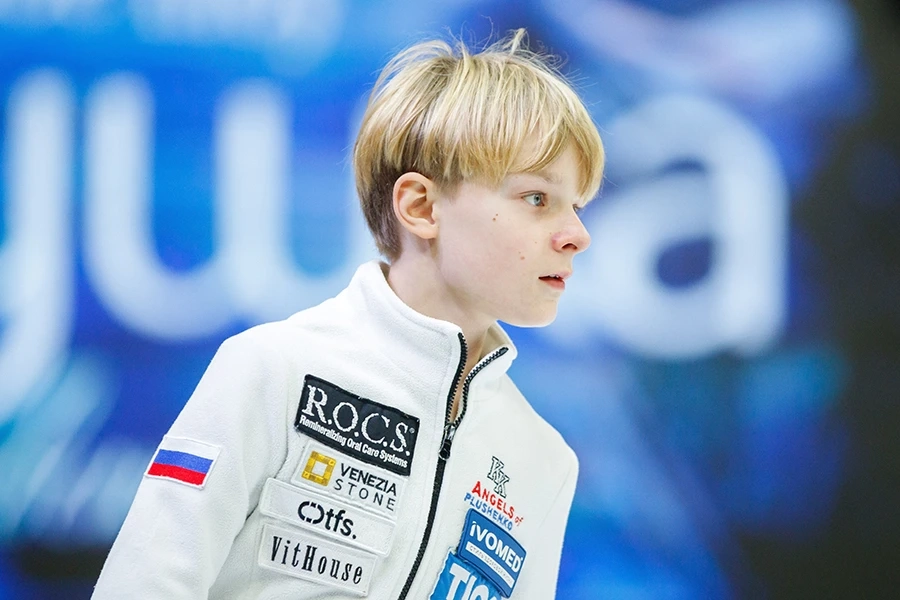
Aleksandr Plyushchenko, a 13-year-old figure skater better known as "Gnom Gnomych," may represent Azerbaijan in international competitions in the future. The Russian Figure Skating Federation has already given him permission, and the final decision will depend on the approval of the International Skating Union (ISU).
Formally, this appears to be a standard procedure for changing sports citizenship. But in reality, there are more questions than answers in this matter.
Let's start with the main point. Aleksandr Plyushchenko is undoubtedly a well-known figure in the media. He is the son of Evgeni Plushenko, one of Russia's most recognizable young figure skaters, a participant in ice shows, and a regular on social media. However, despite his fame, he is not an athlete who has achieved significant results on the international stage. Moreover, his career so far has been associated with show programs, not high-level competition experience.
And here the main question arises: What does Azerbaijan need such an athlete for?
The logic behind sports migration is usually simple. Countries invite either well-known stars who can win medals immediately, or athletes who promise clear development prospects. In this case, we see neither the former nor the latter. If Plyushchenko's son were seen as a future star of world figure skating, the Russian side would not let him go so easily. In a country with a strong school and competition, such athletes are usually retained and developed.
So, the emphasis is on the name, not on sports performance. But can a name replace a system?
Even if we assume that Aleksandr Plyushchenko will be able to qualify for the Olympic Games, the mere fact of participation is not an indicator of the development of sports in the country. The Olympic Games are not a foundation, but a peak. And the foundation of figure skating in Azerbaijan remains quite weak.
Today, the development of this sport requires completely different decisions. These include:
attracting strong foreign coaches;
building a training system from the children-youth level;
creating a professional infrastructure;
increasing the number of ice rinks;
skilled management and promotion.
Without these, any separate "import" project is not a strategy, but cosmetics.
Another important point is where and how the athlete will train. It is clear that Aleksandr Plyushchenko will continue to train in Russia, in his familiar environment. This means that Azerbaijan will have no role in his development as an athlete. At best, Azerbaijan will receive official representation at competitions. At worst, it will get a name that does not yield results.
And even in the best-case scenario, the following question arises: what will happen next? Suppose an athlete competes, stays outside the top three, or even wins a medal, but cannot create sustained interest in figure skating within the country, does not contribute to laying the foundation, and... ends his career, at least under our flag.
What remains after that? What foundation? What school? What talent? What will Azerbaijan and its figure skating sport gain from this?
The answer is clear: nothing.
Therefore, such steps are not part of a well-thought-out strategy, but rather a situational decision based on a big name. Perhaps this will have a short-term informative effect. But in the long term, such decisions will not shape either the system or the results.
The development of sports is not about individual names. It's about the environment, infrastructure, and consistent work. Until the emphasis shifts from the foundation to symbolic steps, Azerbaijan cannot expect any serious progress in figure skating.
Hamid Hamidov