















 Idman.biz
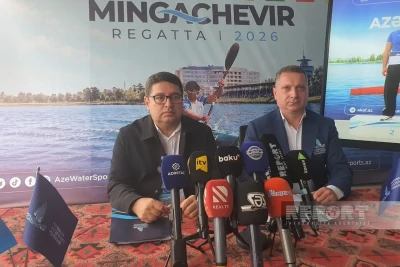
At the recent meeting of the Minister of Youth and Sports Farid Gayibov with representatives of national sports federations at the Azerbaijan Sports Academy, special attention was paid to the "Azerfit" project.
Idman.Biz reports that although little has been written about this project in the local media so far, there is little doubt that in the near future it will seriously change the approach to the athlete training system in Azerbaijan.
The idea of the project is seen as an attempt to transfer the development of sports to measurable and manageable digital foundations. Here, decisions will be based not only on subjective feelings and traditional reports, but also on systematic data. In the public agenda, "Azerfit" is increasingly being associated with the concept of artificial intelligence (AI), as well as physical and psychological training plans presented by experts invited during the meeting - Edvard Kolar, Rado Pishot, Matey Tushak and Tomash Levak.
From a technical point of view, "Azerfit" relies on a broader architecture described in international materials as a "reliable national AI-based sports data platform." The Ministry of Youth and Sports of Azerbaijan, together with the Sports Academy and relevant partners, is building an infrastructure that will start with the digitization and categorization of every athlete registered in the country, as well as the creation of a unified digital map of sports infrastructure.
This base should support the "Azerfit" program and form a secure and compliant data environment that will allow advanced analytics and AI tools to be connected in the future.
One of the important aspects of the project is that the platform ensures the verifiability of data sources and the reliability of AI results. At the same time, it is emphasized that the system will be fully owned and managed by the ministry. This platform concept was presented at an international specialized forum in Ljubljana.
However, "Azerfit" is not limited to creating a large database. The project also has an applied side, which involves measuring physical fitness through standardized tests and clear reports. "FitBack Europe" plays a key role in this direction. The Azerbaijan Sports Academy previously announced that a training dedicated to a reliable AI platform for sports data was held, and the participants were trained to create "Azerfit" based on the "FitBack Europe" platform.
"FitBack" is essentially a digital monitoring tool for physical fitness for children and adolescents. The system generates interactive reports based on entered test results, providing normative assessment and analysis in a health context. Reports include assessment of health risks and comparative interpretation based on European data. Among the tests that can be used for mass monitoring in methodological materials are the 20-meter shuttle run (this type of run is also used in relays, especially obstacle mixed relays - ed.), standing long jump, hand grip strength, as well as basic anthropometric indicators such as height, weight and waist circumference.
The practical mechanism of "FitBack" is quite simple: test results are entered into an online form and an individual report is immediately generated. If necessary, it is also possible to create group reports for schools, sports sections and mass sports programs. It is especially emphasized that the principle of confidentiality is protected: data is not stored in the system, it is only used to generate the report and then deleted, personal data is not archived.
In terms of content, this approach gives the "Azerfit" project a strong applied character. If the national AI platform ensures a unified record of athletes and infrastructure and the collection of reliable data, the "FitBack" approach solves the problem of regular testing of physical fitness and clear feedback.
Overall, the project appears to be an attempt to create a unified digital system that can be useful for all areas, from mass physical culture to the training of professional athletes. This system will create a base for more accurate planning of loads, monitoring dynamics and analyzing results on a national scale.
Although official dates for the full implementation of "Azerfit" have not yet been indicated in open sources, it seems that in 2025 the project has already moved from the idea stage to personnel training and technology testing. And in 2026, the recent meeting of Minister Farid Gayibov with federation representatives showed that the topic of AI and "Azerfit" has become a permanent part of the state's sports agenda.