















 Idman.biz
The situation of the Swedish national team in the qualifying round for the 2026 World Cup seems paradoxical: despite finishing last in Group B, the team managed to qualify for the play-offs and, as a result, secured a place at the World Cup.
İdman.Biz reports that the explanation lies in UEFA's qualifying system, where the UEFA Nations League plays a key role. 12 group winners from the European zone qualify directly for the World Cup, and another 12 teams qualify for the play-offs from second places. But in addition to these, four more national teams reach the play-off stage through the Nations League.
It was this mechanism that saved Sweden. Despite an unsuccessful performance in the qualifying group, the Scandinavians had previously won their group in the 2024/25 season in the Nations League. This gave them an "insurance ticket" for the play-offs in case of failure in the main qualifying.
Then another rule comes into play. UEFA selects only Nations League group winners who could not take the first two places in the qualifying group for the play-offs. If there are such teams, they receive additional tickets and reach the play-offs.
As a result, such a picture has emerged: the majority of group winners in divisions A and B have either qualified directly for the World Cup or have qualified for the play-offs from second places. Therefore, additional places were given to the winners of division C - the Swedish, Romanian national team, the North Macedonian national team and the Northern Irish national team.
All these teams reached the play-offs not because of the results of the main qualifying round, but because of the Nations League. But their fates were different.
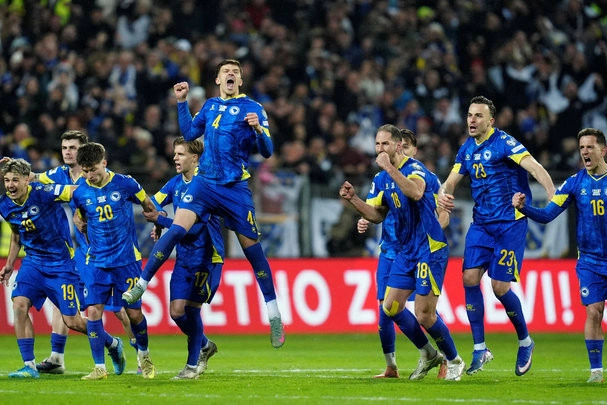
Romania lost to the Turkish national team 0:1 in the semi-finals. North Macedonia suffered a 0:4 defeat against the Danish national team. Northern Ireland lost 0:2 to the Italian national team. Only Sweden was able to take advantage of this opportunity. The Scandinavians first defeated the Ukrainian national team 3:1, and then in a tense final they won 3:2 over the Polish national team, securing their place at the World Cup.
Thus, the Nations League has de facto become a second chance for national teams. This tournament allows teams that succeed in UEFA's separate competition to maintain hope of reaching the World Cup, even if they fail in the main qualifying round.
The story of Sweden clearly shows how this system works. The last place in the group could have been the end for the Scandinavians, but thanks to the Nations League, it just became a comma.